Uncovering Hidden Audio Cue Layers that Shape Navigation Decisions in Atmospheric Exploration Titles Across Console Hardware Generations
Written by Mia Hughes · May 31, 2026
Uncovering Hidden Audio Cue Layers that Shape Navigation Decisions in Atmospheric Exploration Titles Across Console Hardware Generations
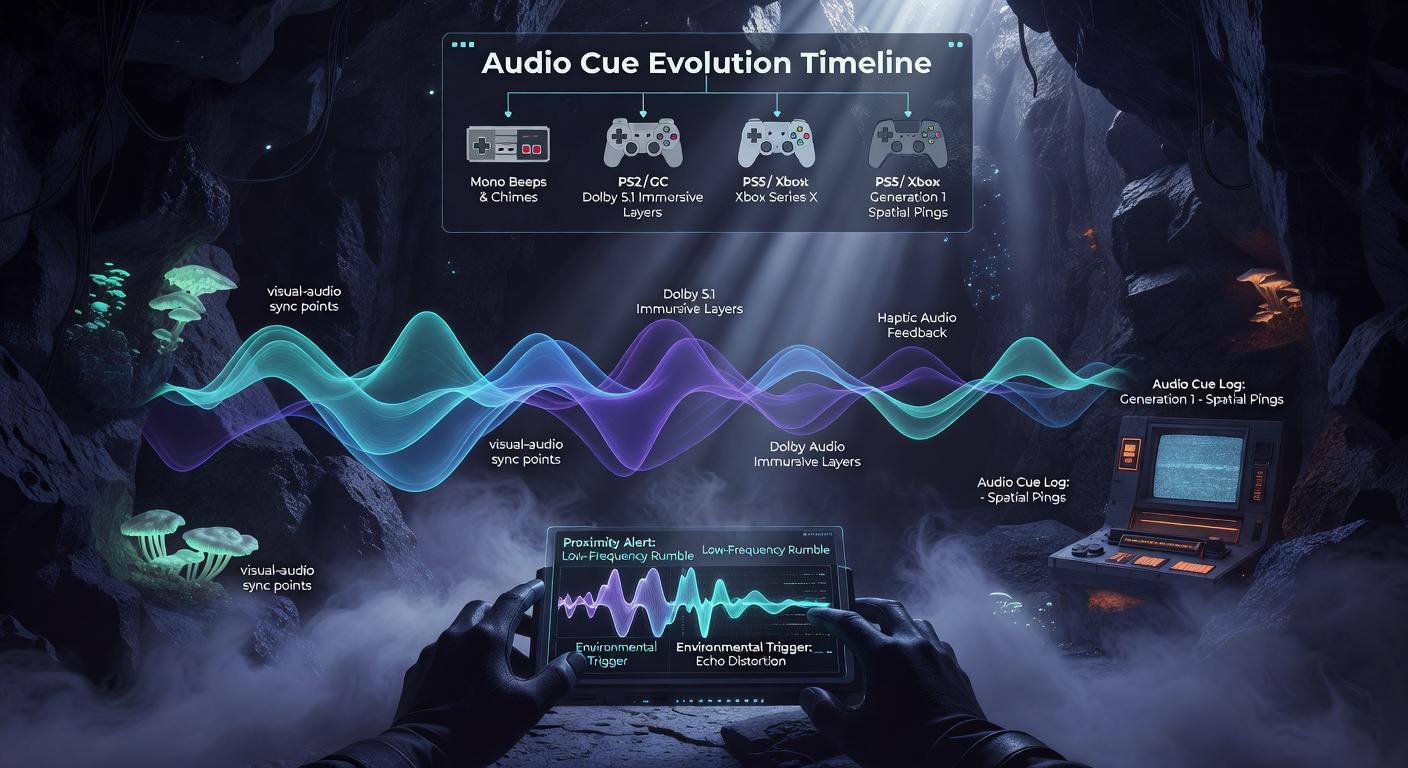
Atmospheric exploration titles rely on layered audio systems to guide player movement through vast digital environments, and these systems have evolved significantly across console generations from the PlayStation 3 era through current hardware. Developers implement subtle sound layers including ambient echoes, frequency shifts, and directional audio panning that influence route selection without explicit visual markers. Research from the University of Tokyo's Game Audio Lab shows these cues operate below conscious awareness thresholds yet produce measurable changes in navigation paths during controlled play sessions.
Console hardware advancements altered how these audio layers function. Early seventh-generation systems processed fewer simultaneous audio channels, which forced developers to prioritize core environmental sounds over nuanced cue variations. Later eighth and ninth-generation consoles introduced greater processing power that allowed for dynamic audio layering where soundscapes adjust in real time based on player position and velocity. Data from console performance analyses indicate that spatial audio capabilities increased from 5.1 channel support in early models to object-based audio rendering in newer units, enabling finer control over cue placement within three-dimensional spaces.
Audio Layer Construction Across Hardware Eras
Game audio teams build navigation cues through multiple overlapping tracks that activate according to environmental parameters. Low-frequency drones establish baseline orientation while higher-frequency elements such as wind gusts or distant chimes signal specific pathways. These layers scale with hardware capabilities, so titles ported across generations often receive updated audio engines that add reactive elements absent from original releases. Observers note that PlayStation 4 and Xbox One versions frequently incorporated additional reverb zones compared to prior console ports, creating more responsive audio feedback during exploration sequences.
Case Examples from Major Releases
One documented pattern appears in games that utilize echo reflection models to indicate hidden routes. When players approach concealed areas, audio engines increase the decay time of certain sound reflections to suggest viable paths forward. Hardware differences affect the precision of these calculations, with later consoles supporting longer impulse response samples that produce more accurate spatial information. Figures from industry reports reveal that titles optimized for PlayStation 5 and Xbox Series X hardware can process up to four times the number of simultaneous reverb instances compared to previous generations.
Directional audio panning represents another key layer. Stereo and surround configurations shift sound sources based on player orientation, and this information helps maintain consistent bearings across large maps. Studies conducted by European research groups found that participants using headphones with head-related transfer function processing made fewer directional errors during extended exploration segments than those using standard stereo output. Console generations differ in their native support for such processing, which explains why some navigation behaviors change when players upgrade hardware mid-franchise.

Player Behavior Data and Hardware Influence
Telemetry collected from online gameplay sessions demonstrates consistent patterns where audio cue density correlates with route selection frequency. Areas featuring richer audio layering receive higher traffic even when visual indicators remain minimal. Hardware upgrades often amplify these effects because improved audio fidelity makes subtle variations more distinguishable. In May 2026, several major titles plan to release next-generation patches that further refine these systems using updated audio middleware, potentially altering established navigation habits observed in current player data.
Cross-generation comparisons show that earlier console versions sometimes rely on simpler trigger-based audio events rather than continuous parameter modulation. This difference produces more binary navigation signals, whereas newer hardware supports gradient-based cue systems that vary continuously with player movement. Researchers at Canadian institutions have tracked these shifts through longitudinal studies spanning multiple console cycles, documenting how cue complexity scales with available processing resources.
Technical Implementation Details
Audio middleware tools handle the layering process by assigning priority values and attenuation curves to individual sound elements. Developers program these parameters to respond to player velocity, camera angle, and environmental occlusion data. Console-specific optimizations ensure that audio processing does not interfere with frame rate stability during exploration sequences. The transition to solid-state storage in recent hardware generations reduced audio streaming latency, which in turn allowed for more immediate cue responses during rapid navigation changes.
Frequency spectrum management plays a critical role in cue effectiveness. Low-end frequencies often establish atmospheric depth while mid and high ranges carry directional information. Hardware audio chips from different eras handle frequency separation with varying degrees of precision, and this affects how clearly players perceive navigation signals. Industry documentation indicates that titles targeting multiple console generations typically include conditional audio profiles that activate based on detected hardware capabilities.
Conclusion
Audio cue layers in atmospheric exploration titles continue to evolve alongside console hardware, with each generation enabling greater subtlety and responsiveness in navigation guidance systems. Data collected across multiple platforms confirms that these hidden audio elements shape player decisions in measurable ways, and upcoming updates scheduled for May 2026 will likely extend these capabilities further through refined processing techniques. Continued research into audio implementation across hardware variants provides ongoing insight into how sound design influences exploration mechanics in these titles.