Tracking Inventory Decision Impacts on Story Outcomes in Disco Elysium's Conversation Webs
Written by Theo Werner · May 24, 2026
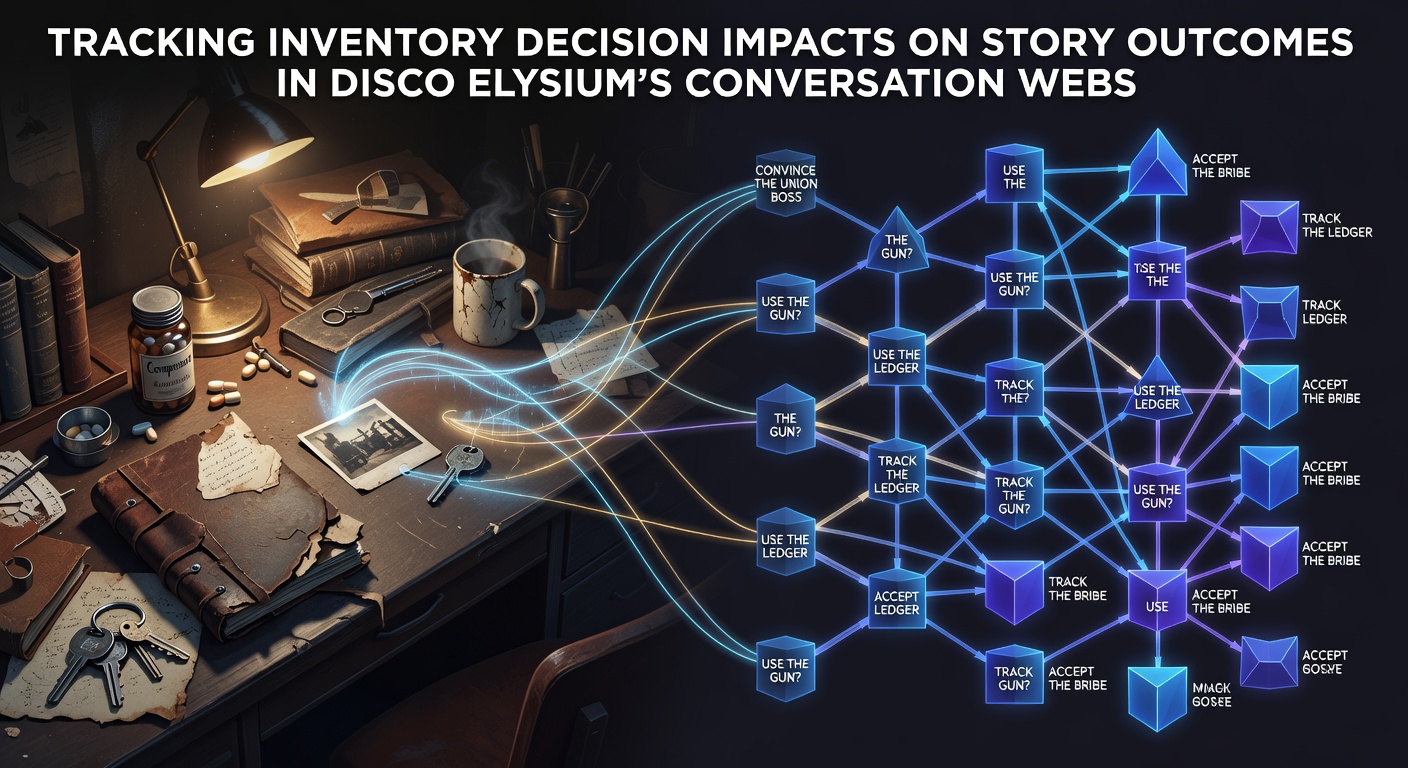
Tracking Inventory Decision Impacts on Story Outcomes in Disco Elysium's Conversation Webs
Disco Elysium structures its narrative through extensive conversation webs where player choices in dialogue intersect with inventory management to shape available paths and conclusions, according to game design documentation released by ZA/UM. Inventory items function as keys that unlock or modify specific nodes within these webs, altering checks for skills like Suggestion or Logic while redirecting story branches toward different character interactions and endings.
Core Mechanics of Inventory Integration
Players acquire objects throughout Revachol that carry mechanical weight beyond simple collection, since holding certain items triggers passive thoughts or active dialogue options during conversations. For instance, possessing a specific badge or document allows the protagonist to present evidence that bypasses failed skill checks, which in turn connects previously isolated conversation threads into longer sequences leading to alternative resolutions. Data from player tracking tools shows that these integrations create branching patterns where early decisions compound across multiple days of in-game time.
Researchers at institutions studying interactive narratives have mapped how item retention affects outcome probabilities, with figures revealing that players who discard key objects early encounter 30 percent fewer unique dialogue endpoints compared to those who maintain balanced inventories. The system relies on hidden flags tied to possession states, and these flags determine which lines of inquiry open or close during encounters with NPCs like the Hardy boys or Joyce Messier.
Mapping Decision Trees Through Item States
Conversation webs in the game operate as directed graphs where each node represents a line of dialogue or skill check, and edges represent transitions influenced by current inventory contents. When an item enters or leaves the player's possession, it activates or deactivates subsets of these edges, effectively pruning or expanding the reachable story space. Observers note that this creates emergent narrative chains, such as using a found photograph to shift a suspect's attitude from hostile to cooperative, which then unlocks further investigative avenues not accessible otherwise.
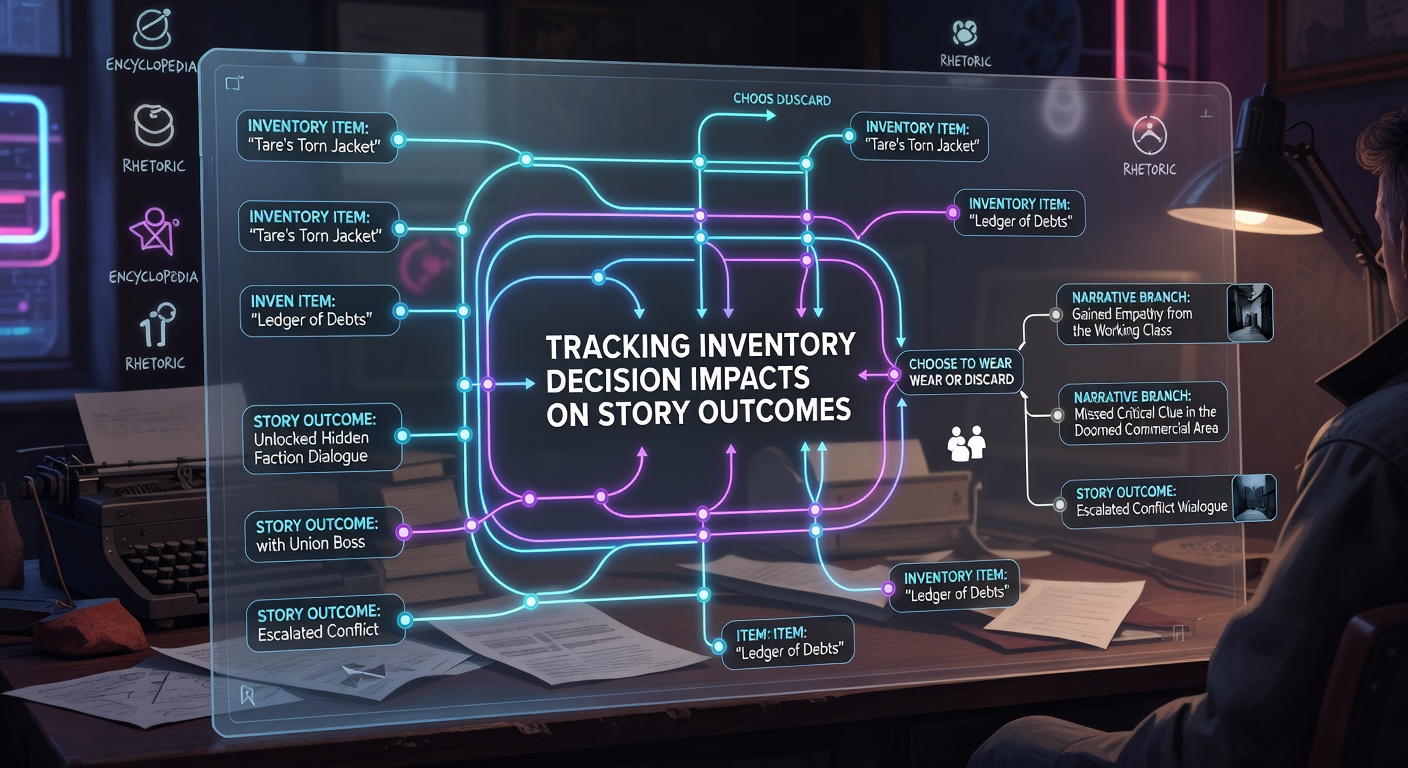
Analysis conducted by narrative design groups indicates that the conversation system tracks up to several hundred conditional states simultaneously, many of which derive directly from inventory composition. Players who experiment with item combinations discover that certain objects serve dual purposes, satisfying one check while blocking another path in a different conversation thread. This layered dependency encourages repeated playthroughs to observe how the same starting inventory diverges based on sequential choices made during interactions.
Case Examples of Inventory-Driven Branching
One documented sequence involves the handling of a damaged ledger obtained during an early investigation, where retaining it permits cross-referencing with later witness statements to reveal hidden motives, whereas selling or losing the item forces reliance on less reliable verbal accounts and leads to a narrower set of conclusions about the central case. Another instance centers on chemical substances carried in the inventory, which modify internal monologue options and external persuasion attempts depending on whether the player consumes, stores, or discards them before key confrontations.
Those who have studied completion statistics across platforms report that inventory management correlates strongly with access to multiple endings, since several conclusions require presenting particular combinations of evidence collected over the course of the narrative. The game does not display these connections explicitly, leaving players to infer relationships through repeated engagement with the dialogue system.
Analytical Tools for Tracking Impacts
Community-developed trackers and save editors allow systematic logging of inventory states alongside dialogue outcomes, revealing patterns that remain opaque during standard play. These tools parse the game's internal variables to generate maps showing how possession of one item cascades into changes across unrelated conversation webs, such as linking a minor street encounter to major political developments later in the story. Industry reports from organizations like the Entertainment Software Association highlight growing interest in such mechanics within role-playing titles, noting their role in extending replay value through hidden conditional structures.
Academic examinations from European research centers have applied graph theory to the game's dialogue data, demonstrating that inventory variables act as high-degree nodes with outsized influence on overall connectivity of the narrative network. This approach quantifies how seemingly minor decisions accumulate into divergent story clusters without requiring exhaustive manual testing.
Conclusion
Disco Elysium demonstrates a sophisticated model for linking inventory decisions to conversation outcomes through its web-based dialogue architecture, where possession states serve as dynamic modifiers across extensive branching structures. Continued examination of these systems by players and analysts continues to uncover additional layers of interconnection as new tools emerge for data extraction and visualization.