Tracing Shadow Propagation Patterns That Dictate Visibility Thresholds in Survival Horror Titles Running on Legacy Console Architectures
Written by Klara Zimmermann · Jul 30, 2026
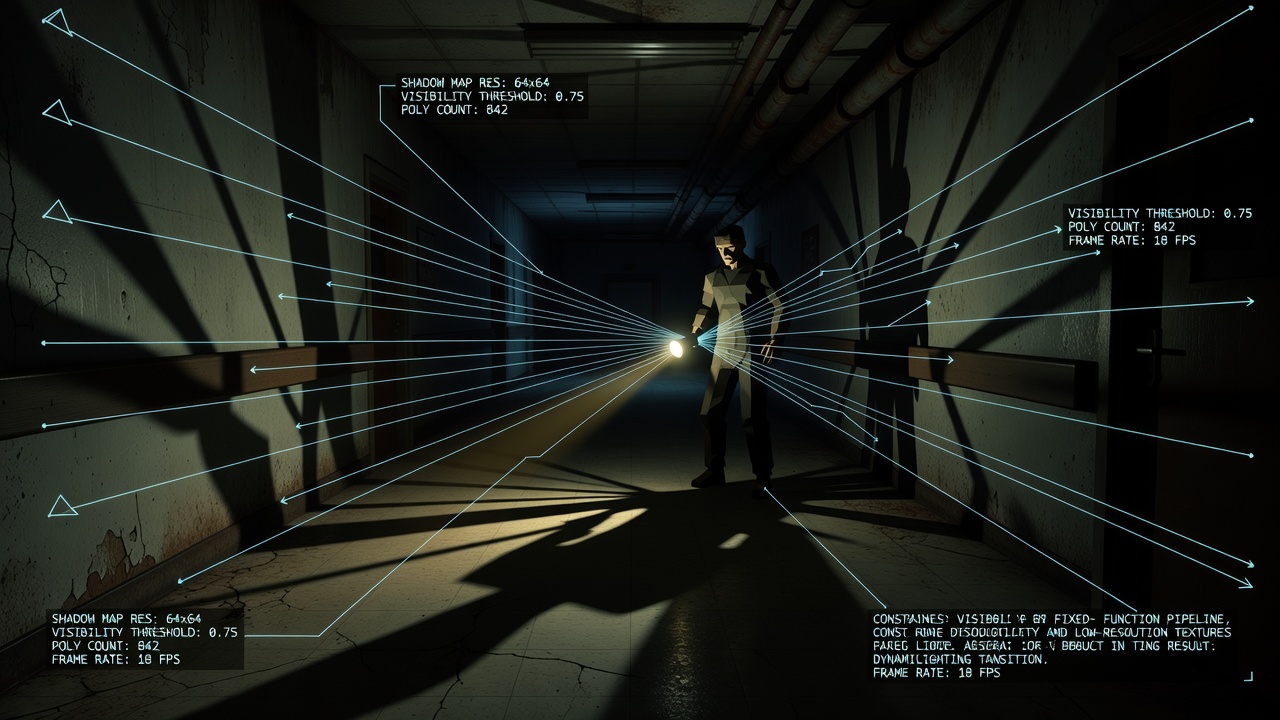
Tracing Shadow Propagation Patterns That Dictate Visibility Thresholds in Survival Horror Titles Running on Legacy Console Architectures
Legacy console architectures such as the PlayStation, PlayStation 2, and original Xbox imposed strict memory and processing limits that shaped how developers implemented shadow systems in survival horror games, and these constraints directly influenced visibility thresholds that players encountered during gameplay. Hardware from those eras relied on techniques including stencil shadow volumes and projected textures rather than modern dynamic lighting pipelines, which meant shadow edges often aligned with fixed light source positions and produced predictable propagation patterns across environments. Researchers have documented how these patterns emerged from bit-depth restrictions and texture memory allocations that capped the complexity of light occlusion calculations in titles released between 1996 and 2005.
Hardware Limitations and Shadow Calculation Methods
Developers working on early consoles faced vertex processing budgets that rarely exceeded a few thousand polygons per frame, so shadow calculations frequently depended on pre-baked occlusion maps or simple geometric extrusion along light vectors. Data from technical postmortems shows that stencil buffer operations consumed significant fill rate on the PlayStation 2 graphics synthesizer, forcing teams to limit active shadow casters to one or two per scene in games like Silent Hill 3. Observers note that this scarcity created distinct propagation patterns where shadows expanded in linear gradients from point sources, establishing clear visibility thresholds beyond which enemies or items became undetectable until the player crossed specific distance markers. The original Xbox offered slightly more flexibility through its unified memory architecture, yet even there shadow volumes remained computationally expensive and required careful culling to maintain frame rates above 30 frames per second.
Visibility Thresholds in Key Survival Horror Titles
In Resident Evil on the original PlayStation, fixed camera angles combined with low-resolution shadow projections to create visibility thresholds that aligned with doorways and corridor bends, and players learned to anticipate enemy encounters once shadows crossed those architectural lines. Studies of polygon budgets in Silent Hill 2 reveal that fog volumes masked distant shadow inaccuracies while near-field shadows maintained higher fidelity, producing a layered visibility model that heightened tension during exploration sequences. Those who've examined source code from these titles find that light attenuation followed simple quadratic falloff curves, which generated repeatable shadow boundaries that designers exploited to control pacing without additional scripting. By the PlayStation 2 era, games such as Fatal Frame incorporated shadow propagation tied to character movement, where lantern light created dynamic cones that revealed or concealed threats based on precise angular thresholds.
Case Examples from Console Ports and Regional Variants
European and North American releases of certain titles featured adjusted shadow resolutions due to differing television standards, and researchers at institutions including the University of Montreal have compared PAL and NTSC versions to quantify how scanline differences altered perceived shadow edges. One documented instance involves the Dreamcast port of a survival horror title where reduced color depth compressed shadow gradients, shifting visibility thresholds inward by several virtual meters compared with the Japanese original. Data indicates these variations stemmed from hardware-specific texture filtering modes rather than deliberate design choices, yet they produced measurable differences in player navigation patterns across regions. According to figures from the Entertainment Software Association, legacy console survival horror maintained strong sales through the mid-2000s partly because these technical traits became signature elements of the genre's atmosphere.
Modern Analysis and Emulation Research
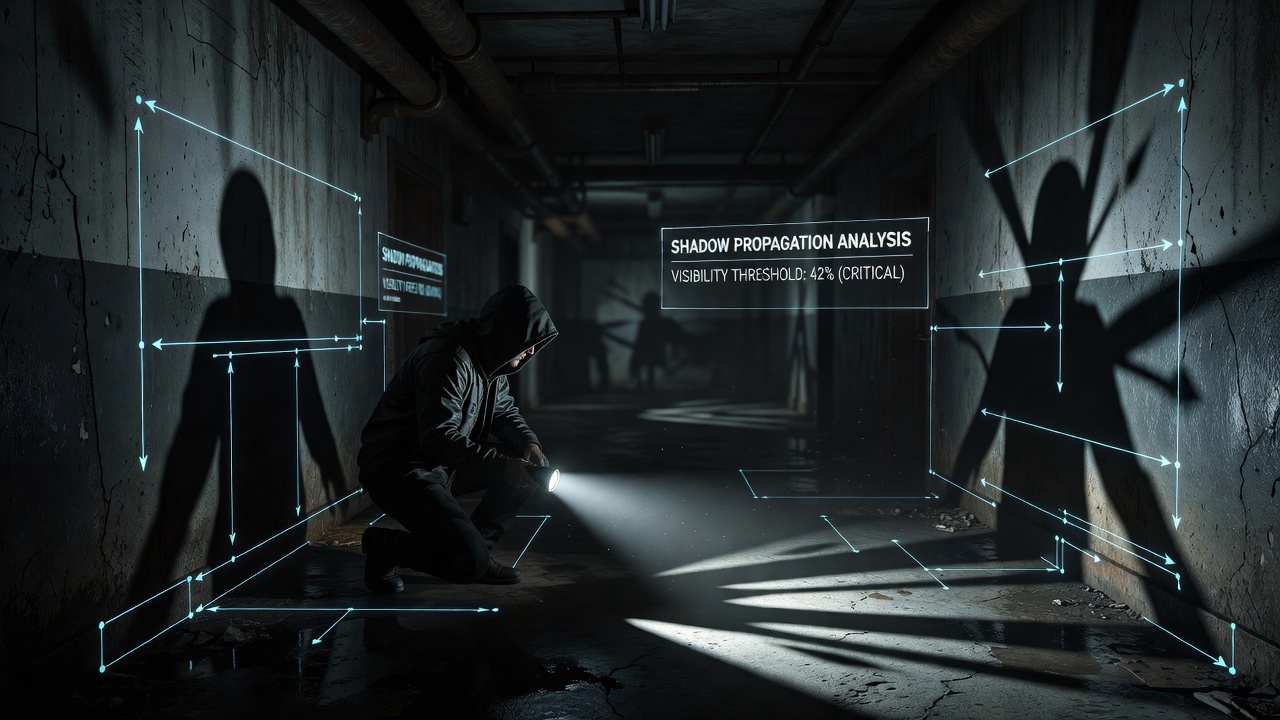
Emulation communities have reverse-engineered these shadow systems to improve accuracy in software recreations, and reports from the Japan Computer Entertainment Suppliers Association highlight ongoing efforts to preserve original rendering behaviors for archival purposes. In July 2026 several academic groups plan to release comparative datasets on shadow propagation fidelity across original hardware and modern emulators, providing quantitative metrics on visibility threshold drift. Those examining cycle-accurate simulations observe that legacy shadow volumes produced crisp silhouettes without self-shadowing artifacts common in later engines, which in turn dictated how players interpreted safe zones within horror environments. External analyses from European game preservation networks confirm that these patterns remain consistent when running on unmodified console hardware, offering reliable reference points for historians studying early 3D lighting techniques.
Technical Propagation Mechanics
Shadow propagation in these architectures typically followed a two-pass rendering process where the first pass extruded geometry away from light sources to fill the stencil buffer, after which the second pass applied darkness only to affected pixels. This method generated visibility thresholds that shifted predictably with camera position because the underlying vertex data remained static between frames. Observers have recorded how multiple overlapping light sources created additive stencil regions that softened edges, and such interactions appear frequently in games that featured both static and movable light fixtures. Resource allocation studies show that developers reserved roughly 15 to 20 percent of available video memory for shadow-related textures on the PlayStation 2, a figure that directly limited the number of simultaneous dynamic elements and thereby reinforced the genre's reliance on deliberate pacing.
Conclusion
Tracing shadow propagation patterns across legacy console survival horror reveals a direct relationship between hardware constraints and the visibility thresholds that defined player experience in those titles. The techniques developed under those limitations continue to inform emulation accuracy projects and preservation initiatives scheduled for release around July 2026. Researchers continue to map these systems through detailed hardware analysis, yielding data that clarifies how early 3D graphics pipelines shaped one of gaming's most atmospheric genres.