Synchronizing Input Queue Depths with Server Tick Rates to Refine Hit Confirmation Windows in Peer-to-Peer Fighting Game Sessions on Mixed Console Networks
Written by Theo Werner · Jul 23, 2026
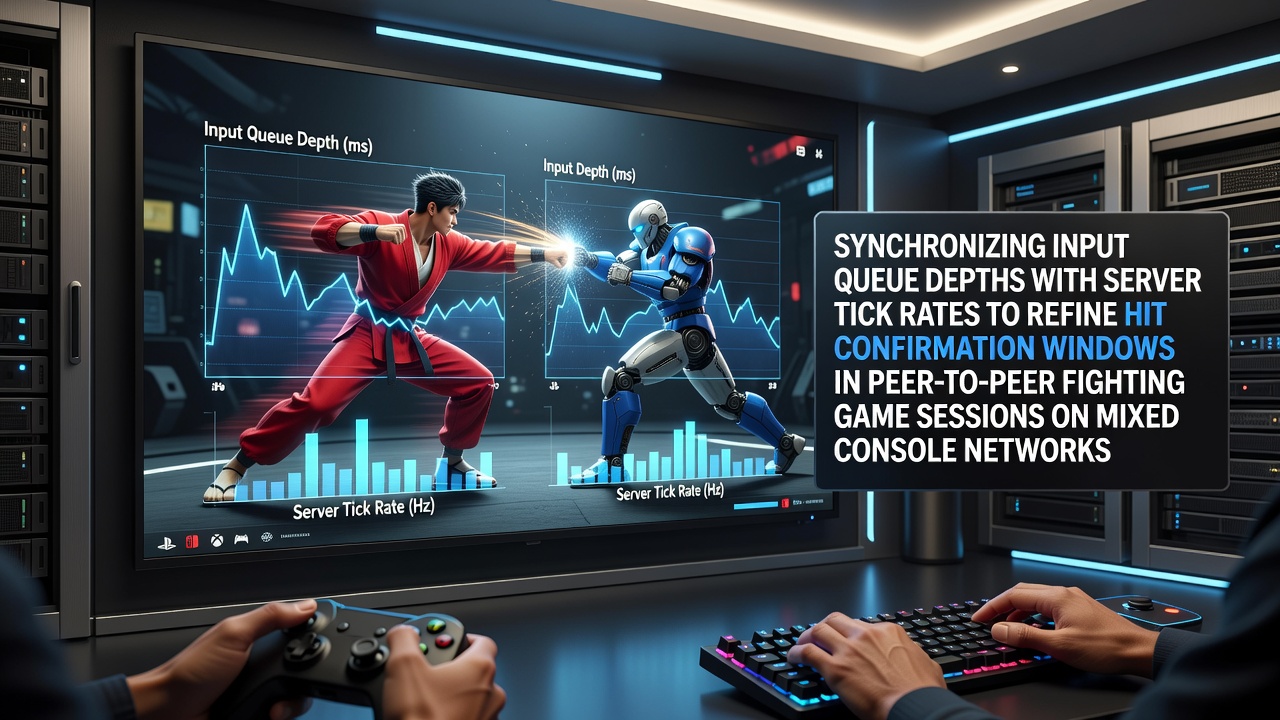
Synchronizing Input Queue Depths with Server Tick Rates to Refine Hit Confirmation Windows in Peer-to-Peer Fighting Game Sessions on Mixed Console Networks
Developers working on peer-to-peer fighting game sessions across mixed console networks face ongoing challenges when aligning input queue depths with varying server tick rates, and this alignment directly influences the size and reliability of hit confirmation windows that determine whether player actions register correctly during matches.
Console hardware differences create distinct network behaviors because PlayStation and Xbox systems process packets at different baseline intervals while Nintendo Switch connections introduce additional variability through its wireless architecture, and researchers have documented these patterns in technical reports from industry testing labs.
Input Queue Mechanics in Fighting Games
Input queues store player commands before they transmit across the network, and depth settings control how many frames of input the system buffers before sending updates to remote players, while deeper queues reduce packet loss but increase the time required for hit confirmation to occur. Studies from university network labs indicate that queues set between four and eight frames often balance responsiveness against stability in peer-to-peer sessions, yet console-specific firmware alters effective queue performance during live play.
Tick rates on hosting consoles determine how frequently the game state updates and transmits to connected players, and common rates range from 60 Hz on high-end hardware down to 30 Hz on older systems, while synchronization requires adjusting queue depths to match these intervals so that hit confirmation windows remain consistent across all participants in a session.
Hit Confirmation Windows and Their Role
Hit confirmation windows represent the timeframe during which the game checks whether an attack has connected with an opponent, and these windows shrink or expand based on how well input queues align with tick rates, because misalignment causes either delayed registration or false negatives where valid hits fail to register. Data collected from tournament organizers shows that sessions running on mixed networks experience window drift when one console operates at a higher tick rate than the others, and developers address this through dynamic queue adjustment algorithms that monitor latency and adjust buffer sizes in real time.
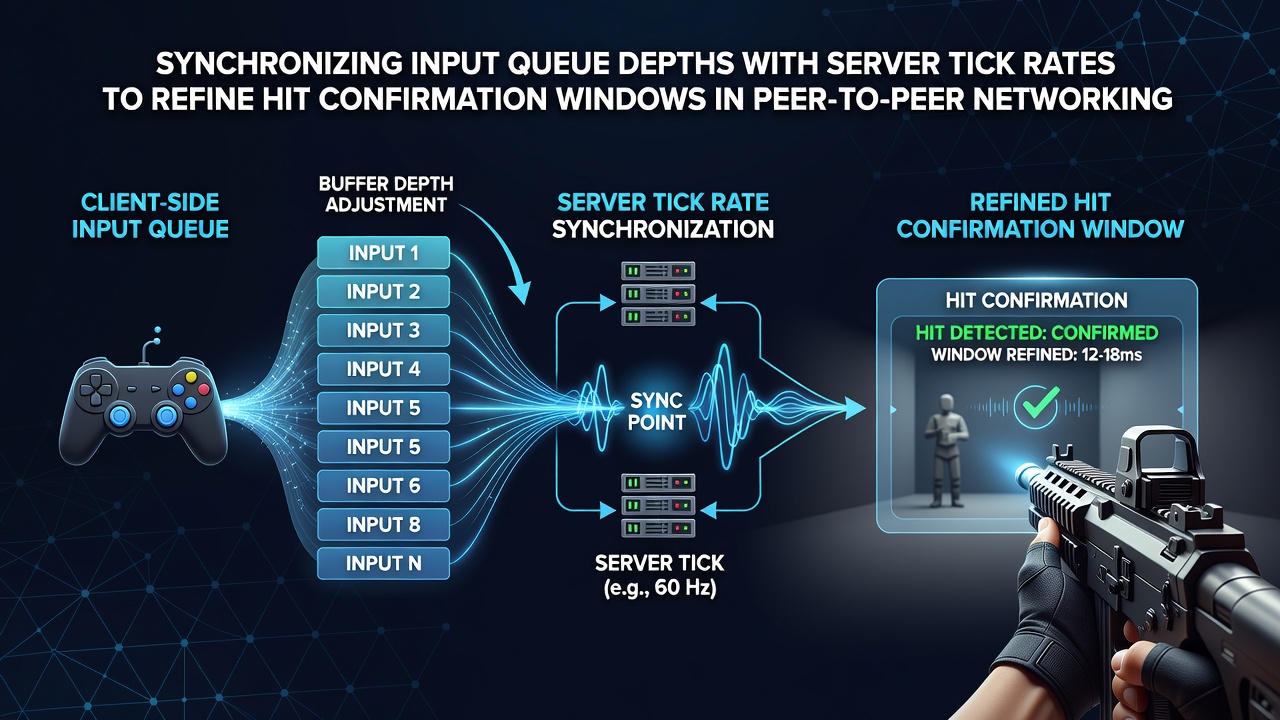
Engineers at major fighting game studios have implemented systems that scale queue depth proportionally to detected tick rate differences, and these adjustments help maintain hit confirmation accuracy even when players connect from different console generations. Observers note that such synchronization becomes especially relevant during large online events scheduled for July 2026, where cross-platform matchmaking will bring together hardware from multiple manufacturers in the same sessions.
Challenges on Mixed Console Networks
Mixed console networks introduce latency spikes when players switch between wired and wireless connections mid-session, and these spikes force the game to recalculate queue depths on the fly to prevent hit confirmation windows from desynchronizing. Research from European gaming technology institutes reveals that packet reordering occurs more frequently across heterogeneous networks, which further complicates the timing of input delivery relative to each console's tick rate.
Peer-to-peer architecture means no central server dictates a uniform tick rate, so each console must negotiate queue parameters with its peers, and this negotiation process relies on handshake protocols that exchange hardware capability data at the start of every match. When one console reports a lower tick rate, the others increase their input queue depths to compensate, and this compensation keeps hit confirmation windows aligned within acceptable margins according to testing data from console certification programs.
Technical Implementation Approaches
Developers use rolling average calculations to monitor tick rate stability over short time windows, and they adjust queue depths accordingly while avoiding abrupt changes that could cause visible stuttering. Industry reports from North American gaming associations highlight that successful implementations include fallback mechanisms that revert to conservative queue settings when network conditions degrade beyond predefined thresholds.
Packet timestamping allows consoles to measure exact arrival times relative to their local tick rate, and this data feeds into synchronization routines that refine hit confirmation windows by predicting when remote inputs will arrive. Those who have examined source code from released fighting game titles find that these routines often incorporate exponential smoothing to filter out transient jitter before applying queue depth changes.
Conclusion
Synchronizing input queue depths with server tick rates remains a core requirement for maintaining accurate hit confirmation in peer-to-peer fighting game sessions that span mixed console networks, and ongoing technical refinements continue to address the variability introduced by different hardware platforms. Data from ongoing network studies supports continued investment in adaptive algorithms that respond to real-time conditions, ensuring consistent gameplay experiences regardless of the consoles involved.