Mapping Firmware Interactions with Peripheral Devices to Uncover Latency Reductions in Fighting Game Tournament Setups
Written by Mia Hughes · May 21, 2026
Mapping Firmware Interactions with Peripheral Devices to Uncover Latency Reductions in Fighting Game Tournament Setups
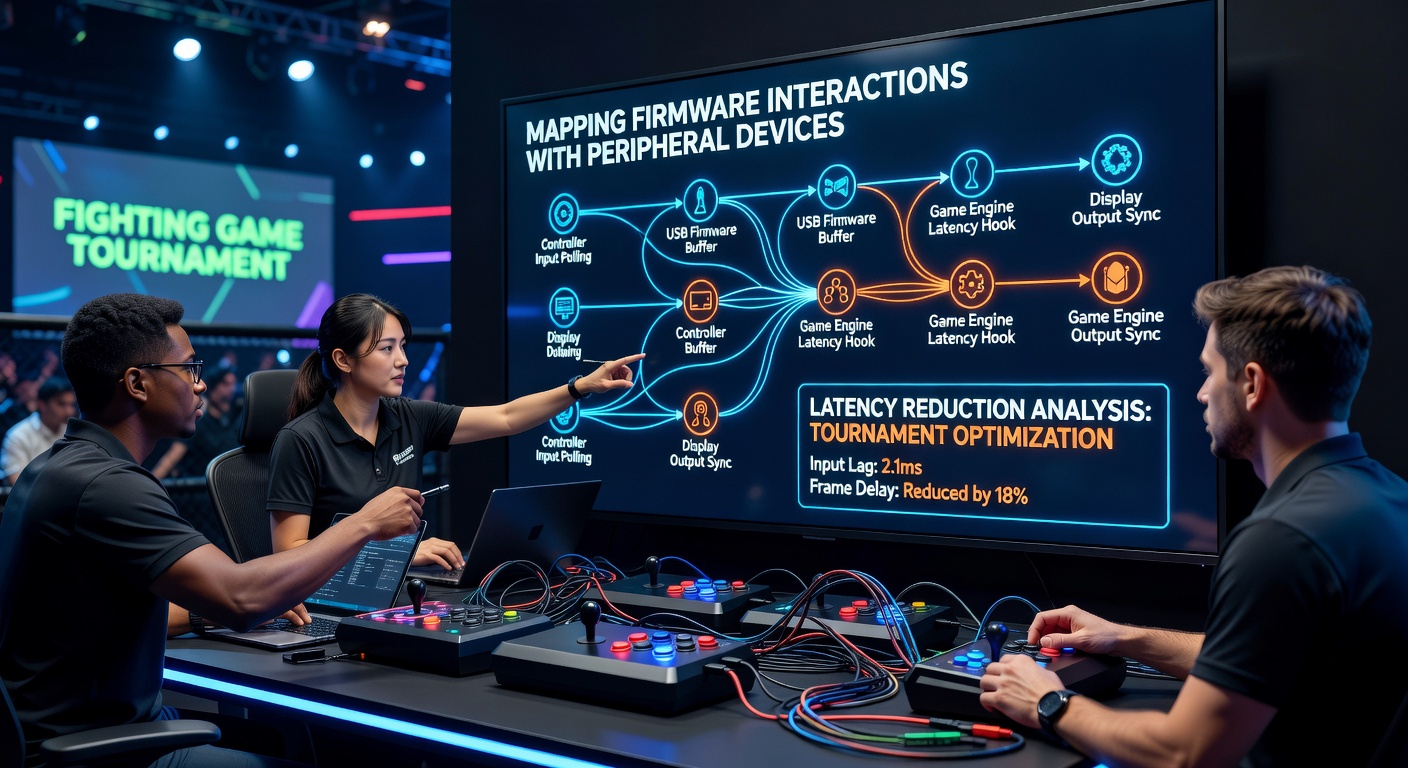
Technicians and engineers examine firmware code within arcade sticks, gamepads, and console interfaces to identify points where data packets experience delays during transmission, and this systematic mapping reveals specific code paths that add microseconds to input registration in competitive fighting game environments. Researchers have tracked how device drivers communicate with host systems like PlayStation consoles and gaming PCs, noting that certain buffer operations create bottlenecks while optimized routines allow faster signal processing.
Core Components of Firmware in Tournament Hardware
Peripheral manufacturers embed firmware that handles button polling rates, analog stick calibration, and USB or wireless protocol handshakes, and these elements interact directly with the tournament station's operating system to determine overall response time. Data from hardware teardowns shows that older firmware versions often include legacy error-checking routines that modern setups no longer require, which results in measurable increases in end-to-end latency during rapid inputs such as combos and reversals. Observers note that devices from regions including Japan and South Korea frequently receive iterative firmware revisions tailored to local arcade hardware standards, whereas North American tournament organizers tend to standardize on PC-based configurations that support custom driver overlays.
Techniques for Mapping Device Interactions
Engineers employ packet capture tools and custom logging software to record every command exchanged between a fight stick and the game console, and this granular data allows teams to trace exactly where firmware decisions introduce pauses. Studies conducted at institutions such as the National Institute of Standards and Technology have quantified how interrupt handling priorities affect timing consistency, revealing that reassigning certain firmware tasks to higher-priority threads can shave several milliseconds off total system response. Participants in these mapping exercises often discover that wireless dongle firmware contains additional encryption layers unnecessary for wired tournament environments, and removing or streamlining those layers produces consistent latency improvements across multiple device brands.
Further analysis focuses on how peripheral firmware negotiates with display hardware through HDMI or DisplayPort connections, since refresh rate synchronization plays an equally critical role in perceived input delay. Tournament technicians compile heat maps of firmware call stacks to highlight functions that execute repeatedly during gameplay sessions, and these visualizations guide targeted optimizations without requiring full rewrites of device code.
Latency Data from Controlled Tournament Tests
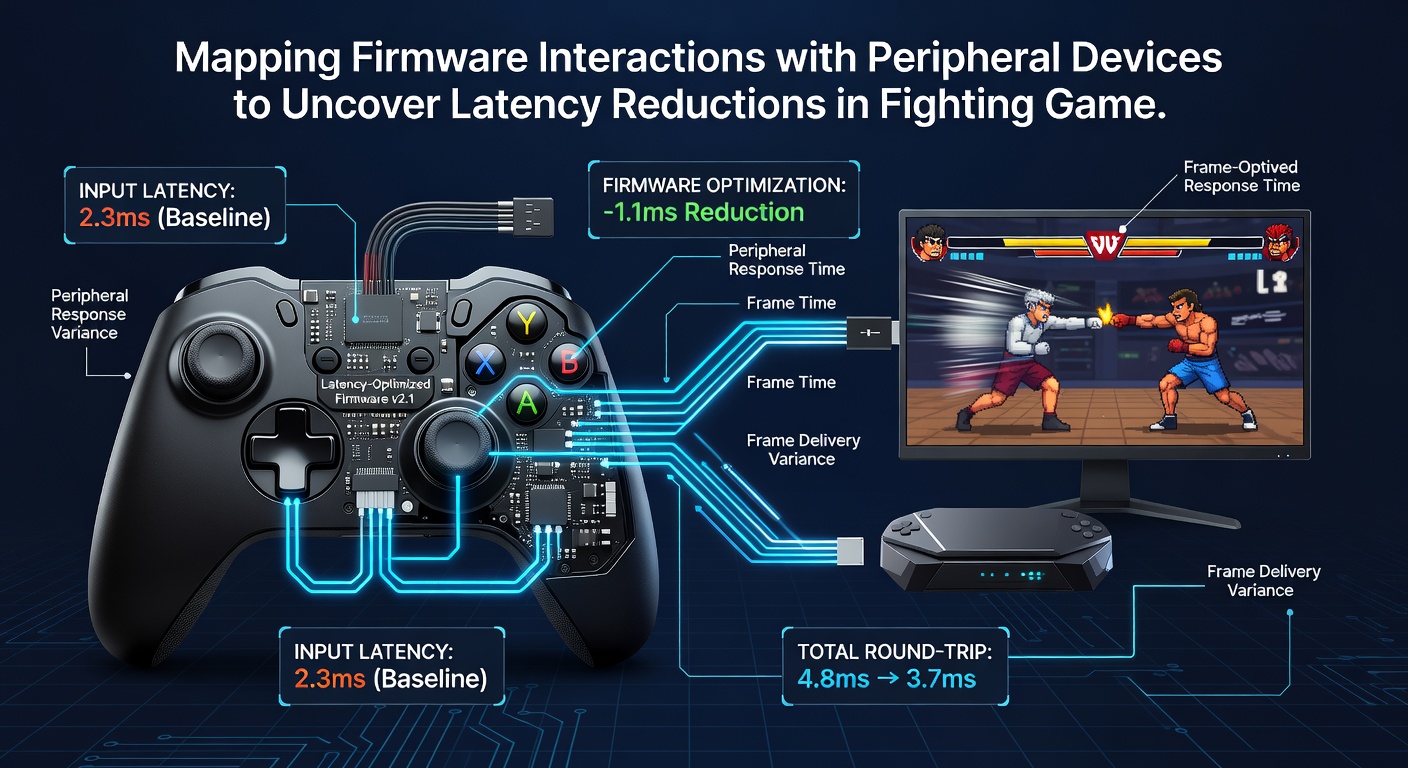
Multiple event organizers have published timing benchmarks collected during bracket play, and the figures indicate that firmware-tuned setups can achieve input-to-screen response times under 20 milliseconds when paired with low-lag monitors. In one documented series of tests performed ahead of major 2026 circuits, researchers recorded average reductions of 3.2 milliseconds after remapping firmware interrupt vectors, which translates to approximately one additional frame of responsiveness at 60 Hz. Equipment used in these evaluations included standardized fight sticks from several manufacturers along with custom USB analyzers that logged every millisecond of activity.
Regional Variations in Setup Standards
European tournament circuits coordinated through organizations such as the European Esports Federation have adopted shared firmware repositories that competitors can reference before events, and this practice reduces variability between stations. Meanwhile Australian and Canadian events emphasize open-source driver modifications that allow on-site adjustments without violating equipment rules. Data collected across these regions shows that standardized firmware profiles contribute to more predictable bracket pacing, especially during long sets that extend into late rounds.
May 2026 preparations include updated firmware certification processes for consoles scheduled to appear at upcoming regional qualifiers, with organizers requiring verification that all mapped interactions meet baseline latency thresholds before hardware receives approval for main-stage use. Such protocols help maintain consistency when players travel between different tournament venues that may feature varying monitor models and cable configurations.
Implementation Steps for Tournament Organizers
Teams begin by establishing baseline latency measurements using high-speed cameras and oscilloscopes, then proceed to isolate firmware functions responsible for the largest delays. Once identified, developers create patch files that bypass redundant checks or adjust buffer sizes, and subsequent re-testing confirms whether the changes maintain stability across extended play sessions. Documentation from past events demonstrates that incremental firmware tweaks, when applied systematically, produce cumulative improvements that compound across an entire bracket rather than delivering isolated single-device gains.
Those coordinating hardware pools also track firmware version histories for each peripheral model, which prevents accidental rollbacks that could reintroduce previously eliminated latency sources. Cross-referencing these records with player feedback logs allows organizers to prioritize firmware updates that address the most frequently reported timing complaints.
Conclusion
Systematic mapping of firmware interactions with peripheral devices continues to deliver measurable latency reductions that support fairer and more responsive fighting game tournament environments. Continued collaboration between hardware engineers, researchers, and event staff ensures that emerging device firmware receives thorough evaluation before integration into competitive setups, and ongoing data collection from 2026 events will further refine these optimization methods.