Mapping Button Remapping Profiles to Accessibility Features Across Diverse Input Devices for Inclusive Gameplay Experiences
Written by Klara Zimmermann · Jul 12, 2026
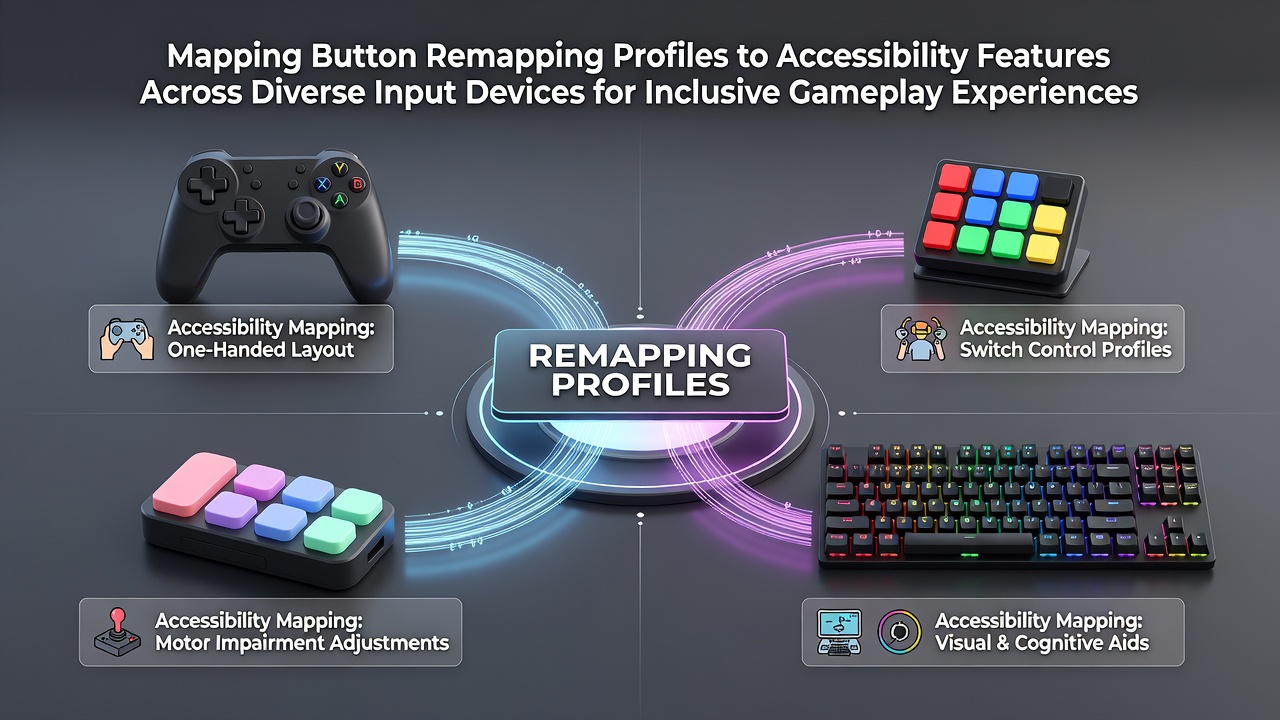
Mapping Button Remapping Profiles to Accessibility Features Across Diverse Input Devices for Inclusive Gameplay Experiences
Button remapping has become a core component of accessibility frameworks that allow players with motor, sensory, or cognitive differences to engage with games on equal terms, and developers now integrate these profiles directly into hardware abstraction layers across controllers, keyboards, touchscreens, and specialized adaptive devices. Research from academic institutions shows that consistent mapping standards reduce setup time by up to 40 percent when users switch between input methods, while platform holders publish guidelines that tie remapping options to built-in accessibility menus. Data from industry reports indicate steady growth in adoption rates, with major consoles reporting increased usage of customizable profiles during 2025 and into mid-2026.
Input Device Categories and Remapping Requirements
Standard gamepads, mechanical keyboards, touch surfaces, eye-tracking modules, and single-switch inputs each present distinct constraints that remapping systems must accommodate through layered profiles. Observers note that controllers with limited buttons often require chorded inputs or hold-duration triggers to access secondary actions, whereas keyboards support macro sequences that combine multiple commands into single keystrokes. Studies conducted across console and PC ecosystems reveal that adaptive devices such as the Xbox Adaptive Controller rely on external switch matrices, and these matrices map to game actions via software layers that sync with operating-system accessibility APIs. Touch devices introduce gesture-based remapping that registers pressure thresholds and multi-finger combinations, while eye-gaze systems translate dwell times and saccade patterns into button equivalents. Those who have examined firmware logs find that latency remains consistent when profiles are stored in device memory rather than streamed from cloud services.
Standards That Link Remapping to Accessibility Menus
Industry groups and regulatory bodies have established common vocabularies that connect remapping interfaces to accessibility toggles, ensuring that profile changes appear alongside options for color filters, subtitle scaling, and audio cues. According to documentation from the U.S. Access Board, software must expose remapping functions through the same settings panel that controls other accommodations so users avoid navigating separate utilities. European regulatory frameworks similarly require that remapping profiles persist across sessions and transfer between devices when users log into cross-platform accounts. Research indicates that when these profiles link to system-level accessibility flags, games automatically adjust input sensitivity and timing windows without additional configuration steps. Figures from platform telemetry show that players who enable both remapping and other accessibility features complete setup sequences faster than those who configure inputs in isolation.
Platform Implementation Patterns Observed Through Mid-2026
Console manufacturers embed remapping tools directly into system software, and updates released in early 2026 expanded support for third-party adaptive hardware on multiple storefronts. PC ecosystems rely on middleware layers such as Steam Input and raw device APIs that allow simultaneous mapping of gamepad axes, keyboard events, and custom HID reports. Mobile titles increasingly expose remapping through on-screen overlays that mirror physical controller layouts, and these overlays sync with external Bluetooth switches. Data collected during tournament environments demonstrates that low-latency mappings remain stable when calibration routines run at the firmware level rather than through application code. Experts tracking adoption rates note that titles supporting persistent cloud-synced profiles see higher retention among users who rotate between desktop, console, and handheld devices.
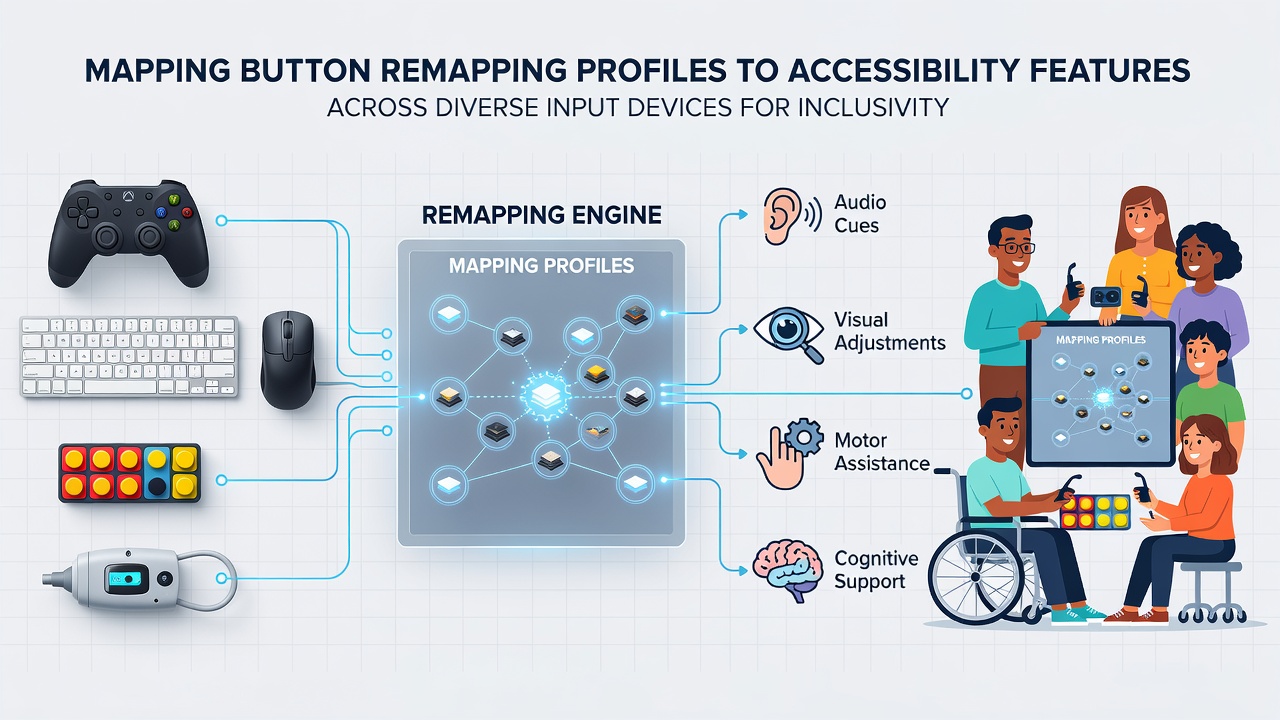
Cross-device synchronization now forms a central requirement, and developers store profiles in standardized JSON schemas that include action identifiers, timing modifiers, and device-specific calibration values. When a user switches from a standard controller to an eye-gaze module mid-session, the game loads the matching profile without requiring manual re-entry of commands. Observers report that this seamless transition reduces cognitive load, particularly in fast-paced genres where reaction windows remain narrow. Academic papers published in 2025 highlight measurable improvements in task completion rates when remapping profiles incorporate context-aware adjustments that scale with game difficulty settings.
Measurement of Effectiveness Across User Groups
Controlled studies compare completion times and error rates between fixed layouts and fully remapped configurations, and results consistently favor individualized mappings when input devices match user motor capabilities. Metrics gathered from public beta programs indicate that players using switch-based inputs achieve parity with standard controller users once profiles receive proper calibration. Government accessibility audits in multiple regions now include test cases that verify remapping persistence after system restarts and across different game versions. Those tracking longitudinal data observe that retention improves when profiles can be shared through community repositories while preserving privacy controls over personal calibration data.
Conclusion
Mapping button remapping profiles to accessibility features across input devices continues to evolve through coordinated standards, platform implementations, and device-level firmware support. Evidence shows that unified profiles reduce barriers for diverse users while maintaining competitive integrity for all participants. Continued alignment between regulatory requirements, industry toolkits, and academic validation supports broader participation in digital play experiences.