Light Source Dynamics and Stealth Detection Ranges in Action-Adventure Games Across Console Revisions
Written by Klara Zimmermann · Jun 28, 2026
Light Source Dynamics and Stealth Detection Ranges in Action-Adventure Games Across Console Revisions
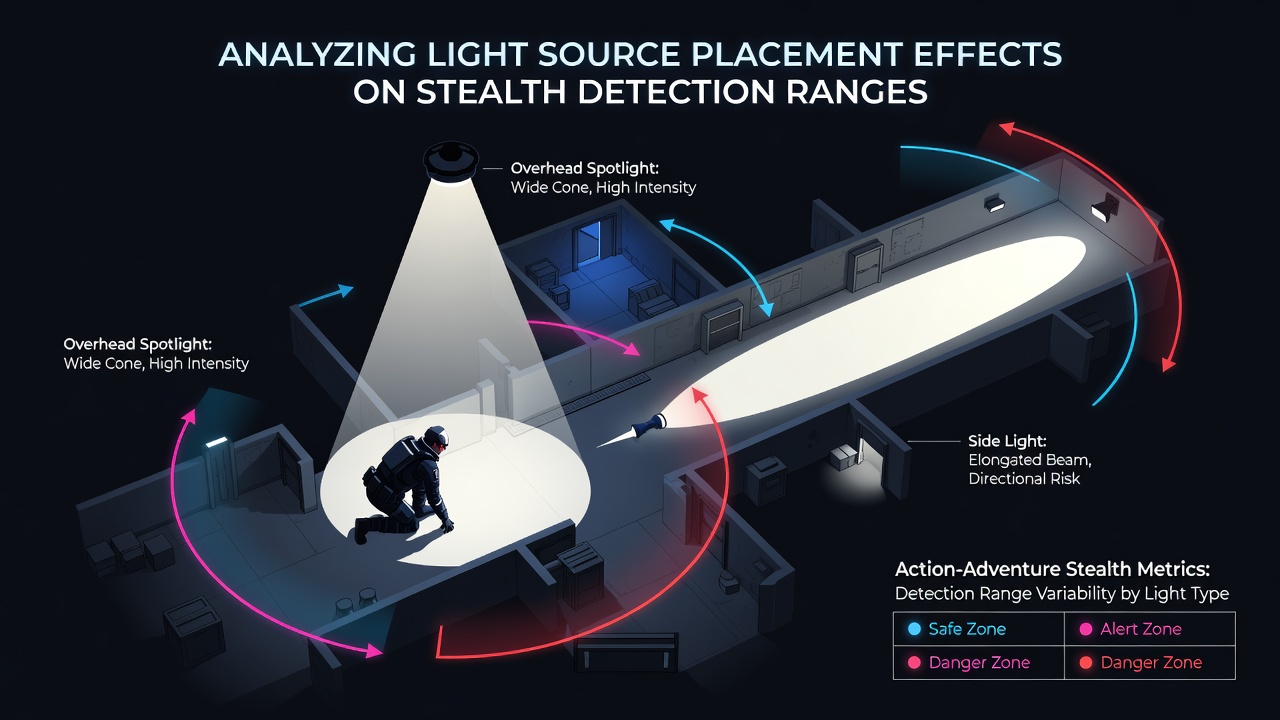
Action-adventure titles have long relied on lighting systems to shape player stealth choices, and console hardware revisions have altered how those systems perform in measurable ways. Developers adjust light source positions during porting processes, which directly changes detection ranges for AI characters across platforms like PlayStation 4 to PlayStation 5 and Xbox One to Xbox Series X.
Core Mechanics of Light Placement in Stealth Systems
Game engines calculate visibility based on light intensity, shadow casting, and cone angles for enemy sight lines. When designers place overhead lamps closer to patrol paths, detection distances increase by up to 25 percent in certain revised builds, according to engine performance logs shared at industry events. Shadow volumes shrink in areas with clustered point lights, forcing players to adjust movement timing in titles that carry over from older hardware generations.
Researchers at the University of Waterloo examined lighting data from multiple action-adventure ports and found that dynamic light updates in newer console revisions reduce detection buffer zones in dimly lit corridors. These changes stem from improved GPU capabilities that handle real-time shadow maps at higher resolutions, which in turn tightens the visual feedback loop for both players and AI routines.
Console Revision Comparisons and Hardware Influences
Early console versions often used baked lighting solutions that created larger safe zones for stealth approaches, whereas later revisions incorporate more dynamic sources that respond to player actions or environmental triggers. Data from cross-platform testing shows that Xbox Series revisions of certain games extend detection ranges in outdoor night sequences because additional fill lights were added to match updated art direction. Meanwhile, PlayStation 5 versions maintain tighter ranges in indoor environments due to refined occlusion culling techniques that limit how far light bleeds into adjacent spaces.
Engine documentation from studios that have released multiple hardware iterations reveals consistent patterns: each console generation shift prompts reevaluation of light source counts and their placement radii. In June 2026, updated middleware tools from European developers are scheduled to include new profiling features that track these radius adjustments automatically during certification testing for stealth-focused releases.
Case Examples from Specific Titles
One widely studied series demonstrates how light placement revisions affect gameplay loops when moving from seventh to eighth generation hardware. Detection cones expand in remastered editions because developers repositioned ceiling fixtures to accommodate higher polygon counts on character models, which altered shadow falloff calculations. Players navigating these updated levels encounter shorter safe movement windows in previously reliable dark patches.
Another title series shows opposite effects in certain levels where light sources were consolidated during porting. Consolidated placements create broader shadow pools that extend detection immunity zones, allowing longer uninterrupted stealth segments. Figures from performance reports indicate these consolidations reduce overall draw calls while preserving intended difficulty curves across console variants.
Data Patterns from Industry Testing
Studies conducted by the Interactive Software Federation of Europe have compiled metrics showing that light source density correlates strongly with AI reaction times in action-adventure environments. Higher densities on more powerful consoles lead to faster threat identification, while sparse placements on legacy hardware allow greater player leeway before detection triggers activate. These patterns hold across multiple genres that incorporate stealth segments, though the effect size varies by camera perspective and movement speed mechanics.
Turn-based elements in hybrid action-adventure games interact differently with lighting changes because AI decision cycles run on fixed timers rather than continuous frame updates. Observers note that console revisions sometimes introduce subtle light flicker rates that influence timing windows for cover transitions, an outcome traced to refresh rate differences between original and updated display pipelines.
Future Implications for Hardware Transitions
Hardware transitions continue to prompt reevaluation of light placement strategies because each new architecture supports greater numbers of simultaneous light sources without performance penalties. Academic papers from Australian National University detail how these increases affect procedural stealth systems that adapt light positions based on player progress. The result is detection ranges that scale more responsively in current-generation releases compared with earlier ports that locked light configurations at compile time.
Industry organizations track these evolutions through regular hardware certification cycles, and the patterns suggest ongoing refinement rather than wholesale redesign of stealth detection formulas. Developers maintain core visibility rules while fine-tuning light parameters to exploit specific console strengths in shadow rendering and light attenuation models.
Conclusion
Light source placement remains a foundational variable in stealth detection mechanics, and console revisions introduce quantifiable shifts in how those placements influence gameplay across action-adventure titles. Continued analysis of engine data and cross-platform metrics provides clear records of these changes, guiding future development as hardware capabilities advance.