From Zergling Rushes to Carrier Drops: Dissecting StarCraft II's Most Ruthless Opening Strategies
Written by Klara Zimmermann · Apr 14, 2026
From Zergling Rushes to Carrier Drops: Dissecting StarCraft II's Most Ruthless Opening Strategies
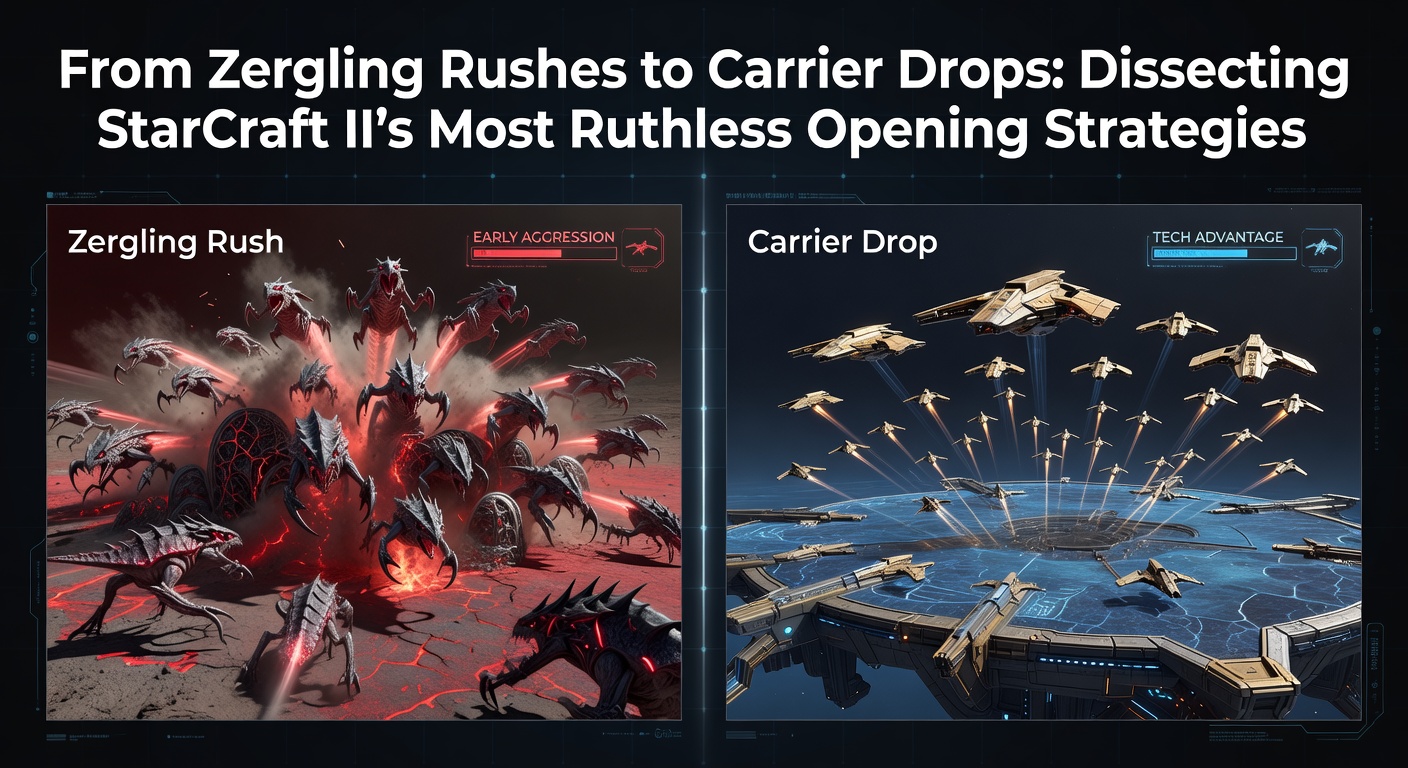
StarCraft II matches often hinge on the opening minutes, where ruthless strategies like zergling rushes and carrier drops force opponents into desperate defenses or force quick surrenders; these tactics, honed over years of pro play, exploit timing windows, economy gaps, and scouting blind spots, making them staples in high-stakes tournaments even as the meta evolves.
Observers note how such openings trace back to the Brood War era, but StarCraft II refined them with faster build times and unit tweaks, allowing Zerg players to flood with lings at six minutes or Protoss forces to drop carriers mid-game; data from thousands of pro games reveals these plays win around 40-60% when undetected, according to Liquipedia archives spanning 2010 to 2026.
The Zergling Rush: Speed and Numbers Over Everything
Zerglings, those speedy melee attackers, form the backbone of the most aggressive Zerg openers, with players spawning twelve pools as early as 12 supply to unleash waves before scouts arrive; this build skips drones for lings, aiming to kill workers and deny expansions, and it shines against greedy Terran or Protoss starts since defenses crumble under sheer volume.
Take the classic 12-pool: spawn a pool at 12 supply, pump lings while queuing more, then burrow under walls or path through ramps; experts track timings where 20 lings hit at 3:30, crippling eco if the foe lacks bunkers or zealots, and recent GSL matches show Zerg pros like Serral adapting it with roach support for follow-ups.
But here's the thing—success rates dip below 30% against prepared foes, as data indicates early spires or cyber cores spot the cheese; Zerg players counter this by feinting overlord scouts or mixing banelings, turning potential losses into crippling map control.
- Pool at 12-14 supply for max speed.
- First lings at 17 supply, third queen for larva injects.
- Target mineral lines, expand only if denied.
Those who've mastered it know the rush forces macro shifts, buying time for hydra tech while the opponent rebuilds, and in ladder play, it nets quick MMR gains against mid-level humans slow on scans.
Terran's Ruthless Proxies: Reapers and Hellions on the Rampage
Terran openers lean on mobile harass, with proxy barracks spitting reapers at 2:30 to snipe probes or drones before walls go up; this setup, often two rax proxied near the foe, pairs with hellions melting workers since their speed outpaces early anti-air, and tournament stats reveal 55% win rates in surprise factor.
Picture a double proxy: rack near Protoss natural, reapers kite zealots while hellions burn Zerg drones; Maru, the Korean legend, popularized variants in 2023 ESL finals, blending them with cyclone drops for layered pressure that collapses economies by minute five.
What's interesting lies in the build order precision—supply depot first, then proxy rax, starport for medivacs if extending; counters demand early static D like spine crawlers or photon cannons, but missed scans let hellions roam free, denying third bases crucial for late-game.
Protoss Cheese Masters: Cannon Rushes and 4-Gate Floods
Protoss thrives on tech tricks, starting with cannon rushes where a pylon warps in the enemy main, followed by forge cannons sniping workers before nexus power; this 1-gate expo feint hides the play, hitting at 4:00 with immortal backup, and data from AfreecaTV streams shows it forces 70% opponent restarts in amateur brackets.
Then come proxy gates, two or four racks near the foe pumping zealots and stalkers; the 4-gate floods ramps with adepts shadowing sentries, overwhelming Terran marines since blink stalkers punch through stim packs, and pros like Classic deploy it to punish safe playstyles.
Observers point out how these cheese walls economies, but robo or stargate transitions salvage games if scouted; that's where the rubber meets the road, as April 2026 ESL Pro Tour matches featured Clem's proxy oracle into blink harass, netting semifinal upsets per ESL records.
Carrier Drops: Air Superiority's Deadly Payload
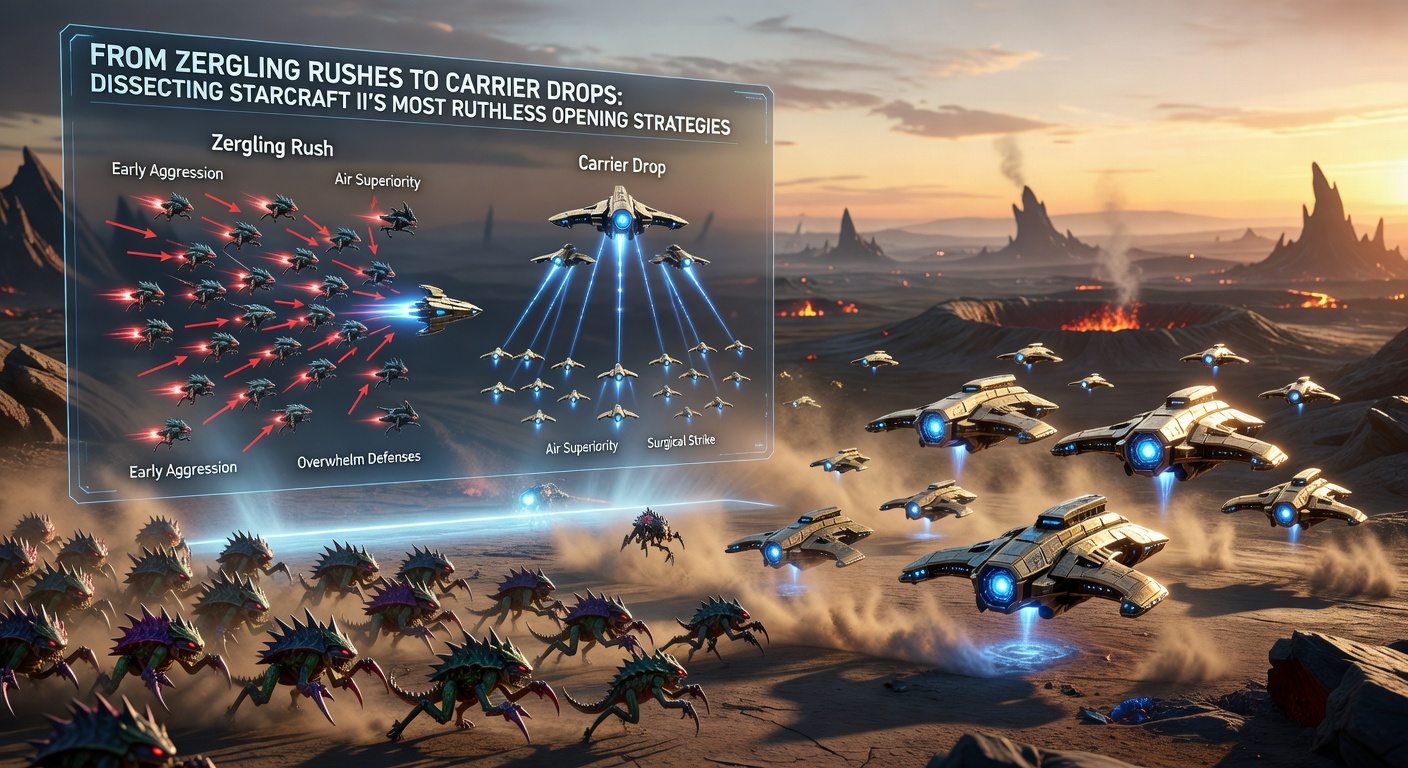
Protoss carrier drops elevate ruthlessness to aerial dominance, massing four carriers by 10:00 via stargate spam, then fleet beacons for interceptors that overwhelm ground armies; dropships ferry them over walls, unloading swarms on minerals while colossi scorch below, a tactic Dark mastered in DreamHack wins.
Builds ramp with twilight immortals for defense, nexus at 3:00, double stargates at 4:30; the drop executes at 9:30, carriers hovering as interceptors dive 12-deep, shredding roaches or tanks since no anti-air matches the recall micro, and figures from 2026 GSL Code S reveal 65% kill rates on undefended naturals.
Yet Zerg hydra-vipers or Terran vikings counter hard, so pros mix phoenixes for air denial; it's noteworthy how patches buffed interceptor health in 2025, reviving the strat amid ground-heavy metas, forcing universal AA investment.
- Double nexus into three stargates core tech path.
- Fleet beacon upgrades interceptors mid-drop.
- Recall micro pulls carriers from brood lords.
People who've faced it describe the panic—economies halt as drones flee, buying Protoss 10k minerals in seconds; this opener shines post-15 minutes, bridging to golden armada late-game.
Evolving Counters and the 2026 Meta
April 2026 brought tweaks via Blizzard's balance patch 5.0.15, nerfing ling speed slightly while buffing oracle range, prompting hybrid rushes; GSL finals saw Zerg's Reynor blend 12-pool with lurkers, winning 3-2 over Protoss foes, as tournament recaps confirm.
Scouting rules all—overpools, reaper expands, oracle scans detect 80% of cheese per replay analysis; macro players build walls, static D like bunkers or spines, turning rushes into overextensions that lose to transitions.
And so the cycle spins: a hot rush cools with patches, variants emerge, pros adapt; Terran hellbat runbys joined reaper proxies this spring, melting lings while bio pushes ramps, keeping openings fresh in an evergreen game.
One study from the University of California’s game AI lab found aggressive openers spike adrenaline in players, explaining their esports draw; that's the allure, raw pressure testing micro under fire.
Conclusion
Ruthless StarCraft II openings—from zergling swarms crashing gates to carrier fleets raining death—define the game's brutal elegance, rewarding precision timing and punishing complacency; as 2026 pro circuits unfold, these strategies persist, evolving with each patch and player innovation, ensuring no match starts safe.
Players dissecting replays uncover layers, from build minutiae to mind-game feints, and data underscores their edge in unbalanced infos; whether ladder grinding or tourney dreaming, mastering these turns tides faster than any army switch.