Decoding Quest Branching Mechanics and Their Consequences on Character Development Paths in Choice-Heavy RPGs Ported to Modern Hardware
Written by Mia Coleman · Jun 21, 2026
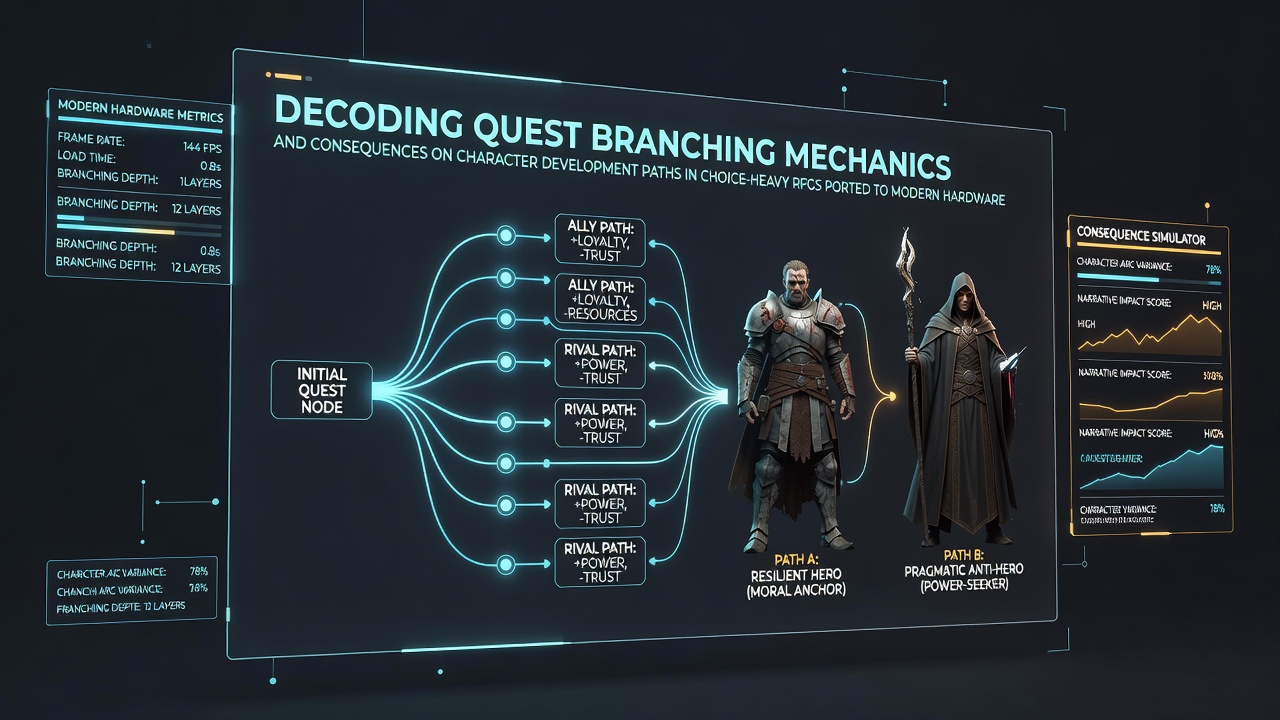
Decoding Quest Branching Mechanics and Their Consequences on Character Development Paths in Choice-Heavy RPGs Ported to Modern Hardware
Choice-heavy RPGs rely on quest branching mechanics that track player decisions through flags, variables, and conditional scripts which then shape available paths and outcomes. When these titles receive ports to modern hardware such as current-generation consoles and high-end PCs, the underlying systems remain intact while rendering pipelines, load times, and input latency improve. Developers preserve the original decision trees because altering them would require rewriting large sections of narrative code and companion AI routines. Players therefore encounter the same branching logic that appeared in earlier releases yet experience it within smoother performance envelopes that reduce interruptions during key dialogue sequences.
How Branching Systems Operate in Core RPG Titles
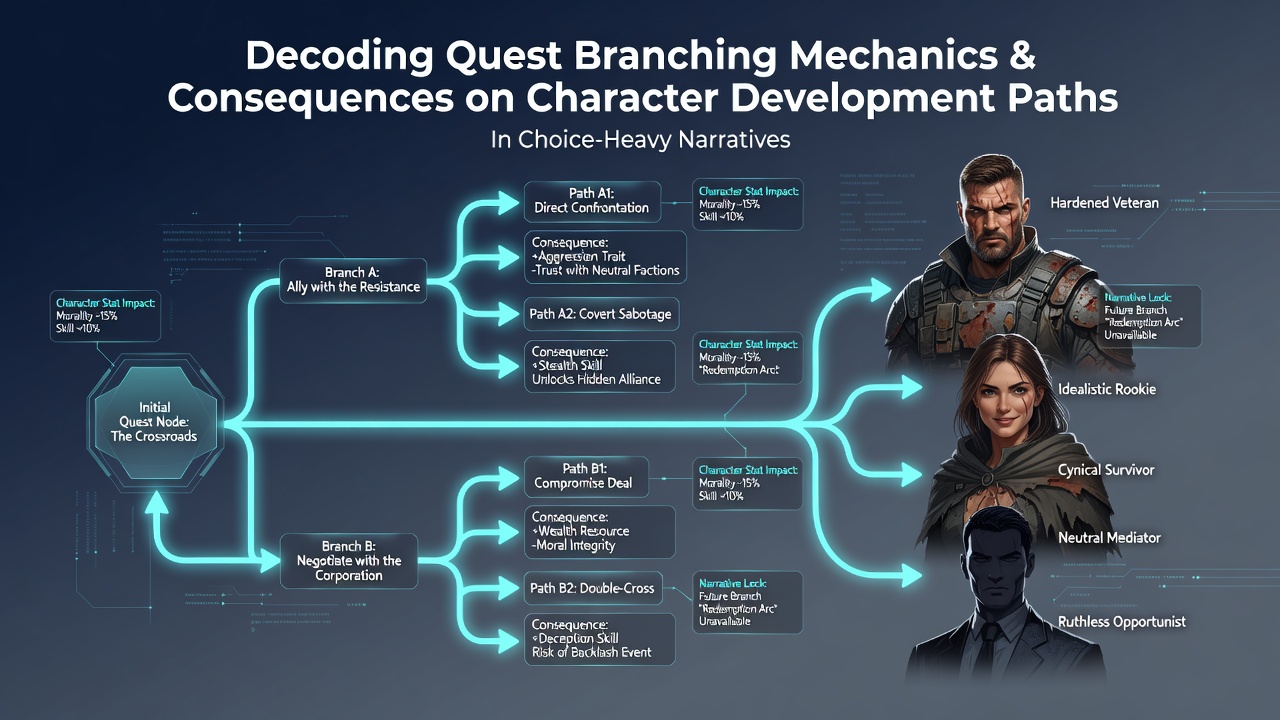
Games like Dragon Age: Origins and The Witcher 3: Wild Hunt store quest states in persistent databases that check conditions at multiple trigger points. A single early choice can set dozens of downstream variables that affect companion approval scores, available side quests, and final confrontation setups. In ports to modern hardware these checks execute faster because solid-state drives eliminate the lengthy pauses that once occurred when scripts pulled data from optical media. Observers note that the reduced latency lets players see immediate narrative feedback more clearly, although the total number of branches stays fixed unless the studio releases a content update.
Character development paths emerge directly from these flags. Skill trees, attribute bonuses, and even voice-line variations lock or unlock based on cumulative decisions across multiple quests. Research from the Interactive Games and Media program at RMIT University in Australia shows that players who pursue consistent moral alignments across a playthrough receive statistically higher rates of specialized dialogue options in later acts. The study examined save files from thousands of sessions and found measurable differences in companion recruitment success when early branching choices aligned with later story requirements.
Consequences for Character Progression After Hardware Ports
Modern ports often include optional difficulty sliders and accessibility features yet leave branching logic untouched. This means character builds that depended on rare quest rewards remain gated behind the same decision sequences that existed originally. In June 2026 several studios plan to release enhanced editions of older RPGs that add ray-tracing support and higher-resolution textures; patch notes confirm that quest flags and companion reactivity tables will carry over without modification. Players who import older saves therefore retain every prior branching outcome while benefiting from improved visual fidelity during cutscenes that display those consequences.
Those who've examined large datasets from platforms such as Steam and console achievement servers report that certain endings appear less frequently after ports because faster load times encourage more frequent save-scumming. The pattern appears across multiple titles, suggesting that reduced friction between attempts changes how often players explore alternate branches rather than altering the branches themselves. Industry reports from the Entertainment Software Association indicate that RPGs continue to represent a significant share of narrative-driven sales, with ported titles contributing to year-over-year growth in the genre.
Technical Interactions Between Modern Hardware and Narrative Systems
Hardware improvements affect how players perceive branching consequences even when the code remains identical. Faster CPU threads allow companion AI to evaluate approval thresholds in real time during extended conversations, producing more responsive facial animations and gesture variations. Memory bandwidth increases also let developers preload additional voice lines that only trigger under specific flag combinations, something constrained on older systems. Ports therefore deliver the original branching depth with fewer technical compromises that once forced designers to prune marginal paths.
Mod communities sometimes introduce tools that expose hidden variables for debugging purposes. These utilities reveal how deeply intertwined quest flags become with character progression systems, showing that a single reputation score can gate multiple skill trainers and equipment vendors across an entire act. When such mods run on modern PCs the inspection process occurs without performance penalties, allowing analysts to map complete dependency graphs that were difficult to visualize during original development.
Player Behavior Patterns Across Ported Releases
Data aggregated from achievement tracking services reveals shifts in completion rates for alternate endings after hardware ports arrive. Titles that once required multiple full playthroughs now see higher percentages of players attempting at least one major branch variation, likely because improved performance makes repeated campaigns less tedious. Yet the distribution of final character builds stays consistent with earlier releases, indicating that the core reward structures tied to branching choices have not changed.
European research groups tracking digital game usage have documented similar trends across console generations. Their figures show that narrative-heavy RPGs maintain steady engagement metrics when moved to new platforms, with branching mechanics serving as the primary driver for replay sessions rather than graphical upgrades alone.
Conclusion
Quest branching mechanics in choice-heavy RPGs continue to dictate character development paths regardless of the hardware generation on which the games run. Ports to modern systems enhance presentation and responsiveness while preserving the original decision trees and flag systems that determine available skills, companions, and endings. Studies and platform data confirm that these structures shape player outcomes in measurable ways, and upcoming releases scheduled for 2026 maintain that continuity. The relationship between early choices and late-game character states remains a defining feature of the genre across successive hardware cycles.