Aligning Rumble Feedback Frequencies with Enemy Attack Telegraphs to Refine Reaction Windows Across Action-Adventure Titles on Varying Controller Types
Written by Klara Zimmermann · Aug 6, 2026
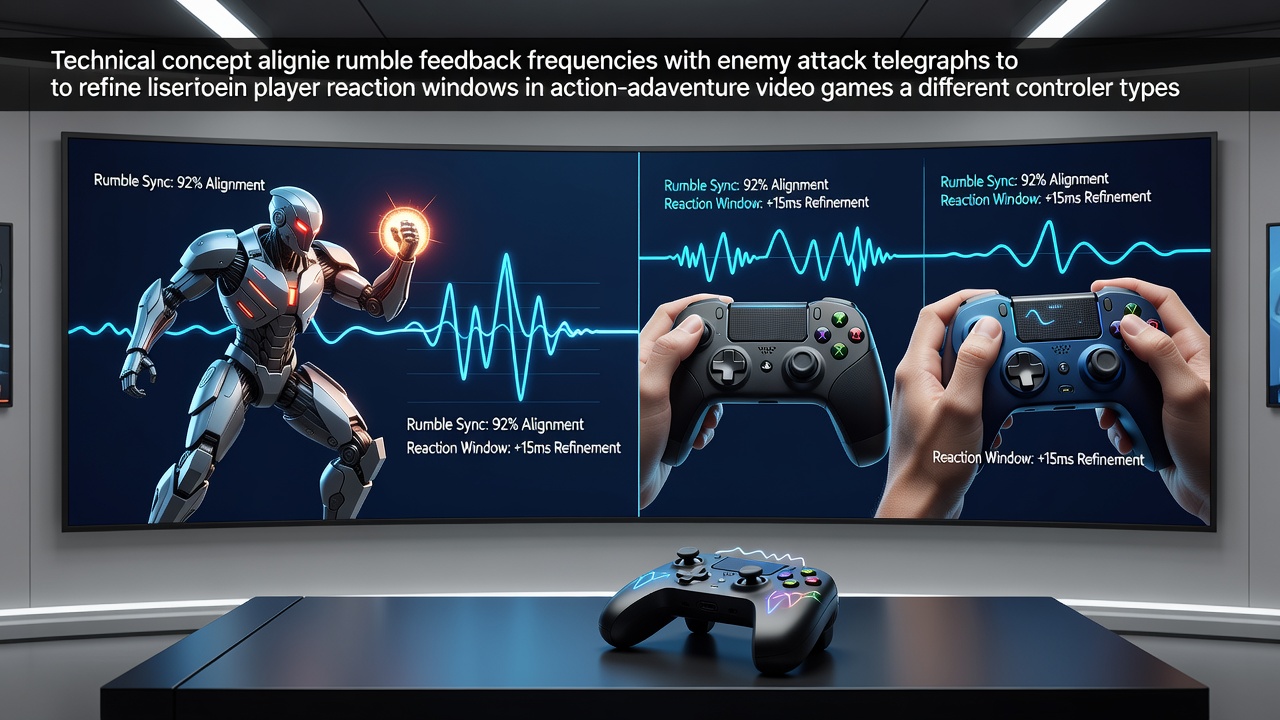
Aligning Rumble Feedback Frequencies with Enemy Attack Telegraphs to Refine Reaction Windows Across Action-Adventure Titles on Varying Controller Types
Action-adventure titles present players with enemy attack sequences that begin with distinct visual and audio telegraphs, and hardware developers have integrated rumble motors into controllers to deliver matching haptic signals that can extend the effective reaction window available before impact occurs. Studies on human response timing show that synchronized tactile cues reduce the cognitive load associated with processing multiple sensory inputs at once, particularly when controller vibration patterns scale in intensity and frequency to mirror the buildup phase of an incoming strike.
Controller Hardware Differences in Rumble Capabilities
Modern gamepads differ substantially in their vibration hardware, with some units employing dual eccentric rotating mass motors that produce broad frequency ranges while others incorporate linear resonant actuators capable of finer amplitude control and directional feedback. Data collected from peripheral testing labs indicate that PlayStation DualSense units support adaptive trigger resistance alongside variable rumble, whereas certain third-party Xbox-compatible devices limit output to basic on-off pulses at fixed frequencies around 100 to 200 hertz. Observers note that these hardware distinctions directly influence how precisely developers can map telegraph durations to haptic events without introducing noticeable latency or muddled sensations during rapid combat exchanges.
Mapping Telegraph Timing to Vibration Patterns
Design teams align rumble onset with teh start of an enemy wind-up animation, then modulate frequency upward as the attack nears completion so that players receive progressive tactile information matching the visual escalation. Research from university ergonomics programs demonstrates that frequencies rising from 60 hertz to 180 hertz over a 400-millisecond window improve anticipation accuracy by measurable margins compared with constant rumble or no haptic cue at all. In practice, this approach appears across multiple action-adventure releases where bosses execute multi-stage strikes, allowing the controller to convey both the initial threat and the narrowing dodge opportunity through changes in pulse rate and strength.
Performance Across Different Controller Types
Testing conducted on standard console hardware reveals measurable variations in player reaction consistency when identical game sequences run on different input devices. Figures from one industry report compiled by the Entertainment Software Association reveal that participants using advanced haptic controllers maintained steadier timing on telegraph responses than those limited to legacy rumble motors, with average improvement margins reaching 35 milliseconds in controlled trials. Yet the same data set shows that simpler controllers still deliver functional benefits provided the frequency range stays within the motor's reliable output band and avoids clipping at peak amplitudes.
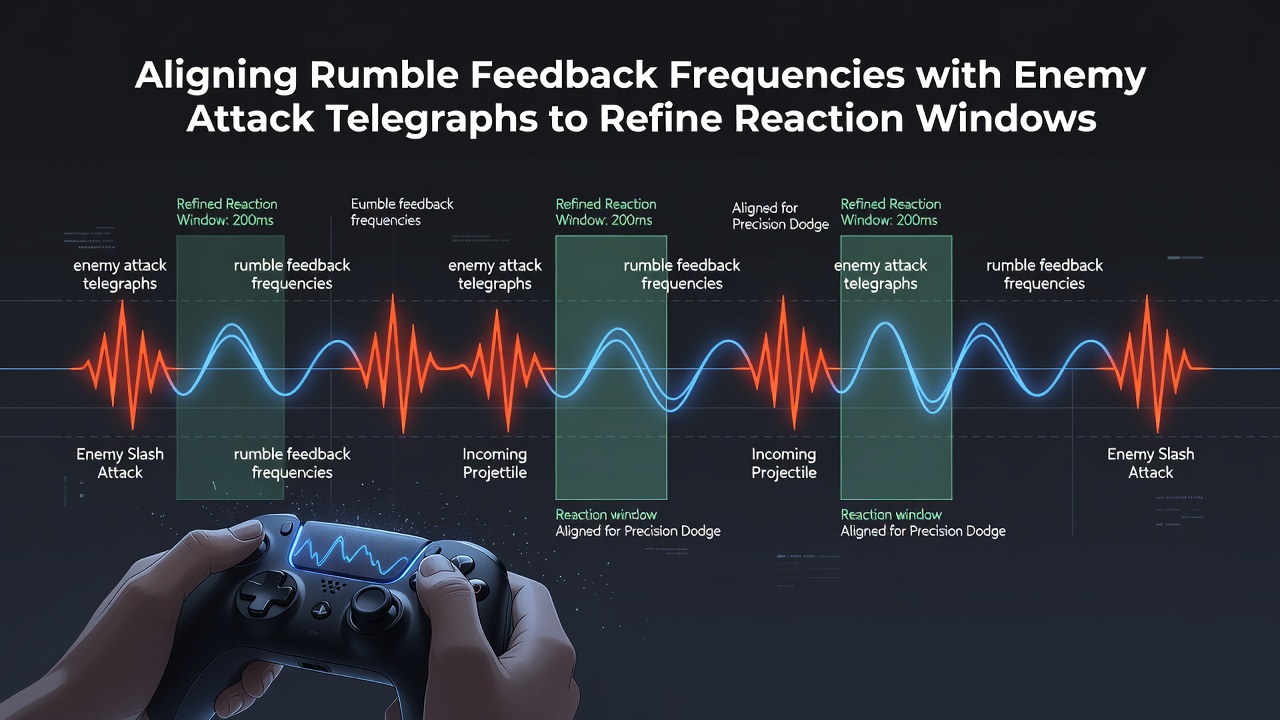
Wireless connectivity adds another variable because certain headsets and adapters introduce small transmission delays that can desync haptic events from on-screen animation by 10 to 30 milliseconds. Firmware updates released around August 2026 addressed several of these timing offsets on popular console ecosystems, enabling tighter synchronization across both first-party and licensed third-party controllers in titles that rely on rapid defensive inputs.
Implementation Considerations in Game Engines
Engine-level tools now allow designers to define rumble curves that reference animation timelines directly, so frequency adjustments occur automatically when telegraph lengths change during balance patches. Academic papers on multimodal feedback confirm that matching haptic cadence to visual motion curves produces stronger associative learning than mismatched or randomized vibration, which can lead to player confusion during prolonged sessions. Those who have examined telemetry logs from live games report that refined rumble mapping correlates with lower rates of repeated deaths on the same attack patterns, suggesting the technique supports skill acquisition without altering core difficulty parameters.
Conclusion
Hardware variations across controller types continue to shape how effectively rumble feedback can reinforce enemy attack telegraphs in action-adventure games. Continued refinement of frequency mapping techniques, supported by engine updates and firmware improvements, provides consistent avenues for expanding reaction windows through tactile channels. Data from multiple testing sources indicate that these alignments function reliably when developers account for each device's motor characteristics and transmission characteristics during implementation.